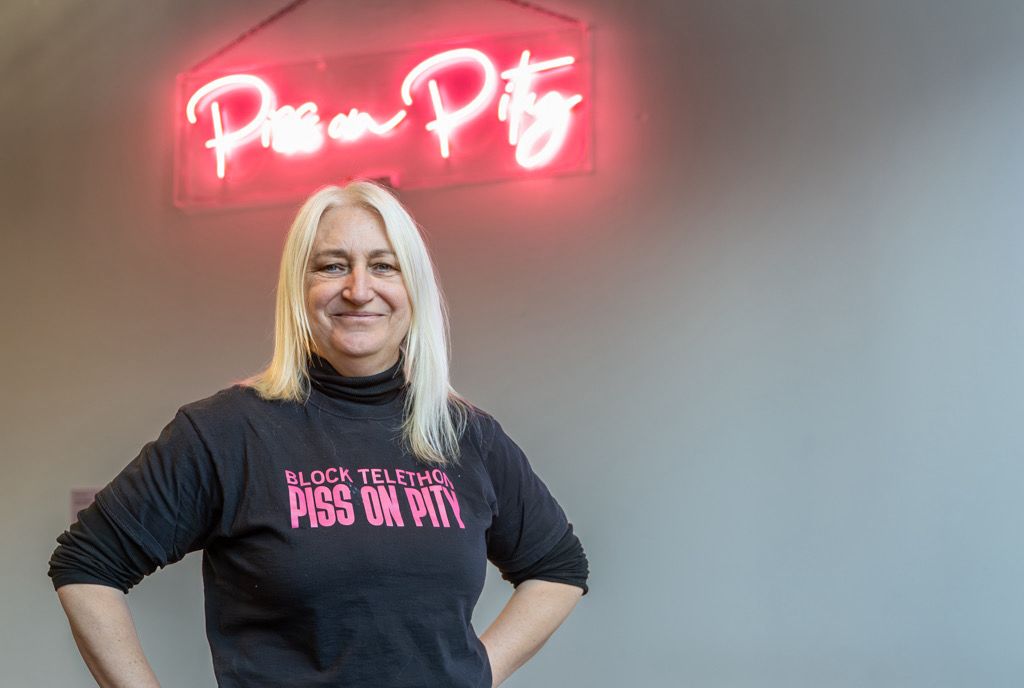
Zoe Partington isn’t just working in disability arts, architecture, climate justice and design—she’s a catalyst for revolution. As a creative influencer, consultant, and trainer, she’s tearing down barriers and igniting a cultural paradigm shift. Her mission? To position disabled artists as the trailblazing professionals our environments, both digital and physical, desperately need to become truly inspiring.
A visionary artist herself, Zoe channels her unique perspective on sight loss into viscerally powerful installations. She masterfully crafts audiovisual and tactile experiences that plunge audiences into the raw journeys of disabled individuals navigating spaces, harnessing digital engagement like a force of nature. Her 2025 exhibition, “Human Rights in Neon Lights,” wasn’t just a display; it was a detonation of public discourse during Disability History Month.
Armed with degrees in Media and Design, Art, Design and Architecture, and Business Management, Zoe is no stranger to the power of influence. Her resume reads like a cultural who’s who, boasting collaborations with giants like the British Library, Arts Council England, RIBA, Shape London, and the British Council.
Zoe isn’t just preparing the cultural sector for disabled artists; she’s rebuilding it. Whether as practitioners, architecture students or visitors, she ensures disabled artists don’t just participate—they thrive. Currently, she’s shaking things up with the Liverpool Culture team, injecting disabled artists into the very heart of sport and art programming.
Her impact resonates globally:
A prestigious fellowship at the Henry Moore Institute in Leeds.
Exhibitions in Madrid, showcasing her work alongside 50 disabled women.
An AIDF Award to Australia and Tasmania, forging connections with blind artists and makers worldwide.
A CABE bursary that propelled her research into wayfinding across Japan, Denmark, and the UK, culminating in her groundbreaking paper, “Naked Space.”
Zoe is a powerhouse on the global stage, regularly speaking and presenting. Even during the pandemic, she was relentless, training countless organizations online, crafting the Accessibility Cultural guidelines for Georgia with the British Council, and igniting the creation of a new, accessible arts center in Armenia by training its staff and architects. She’s not just changing the conversation; she’s rewriting the blueprint for an inclusive, dynamic future.